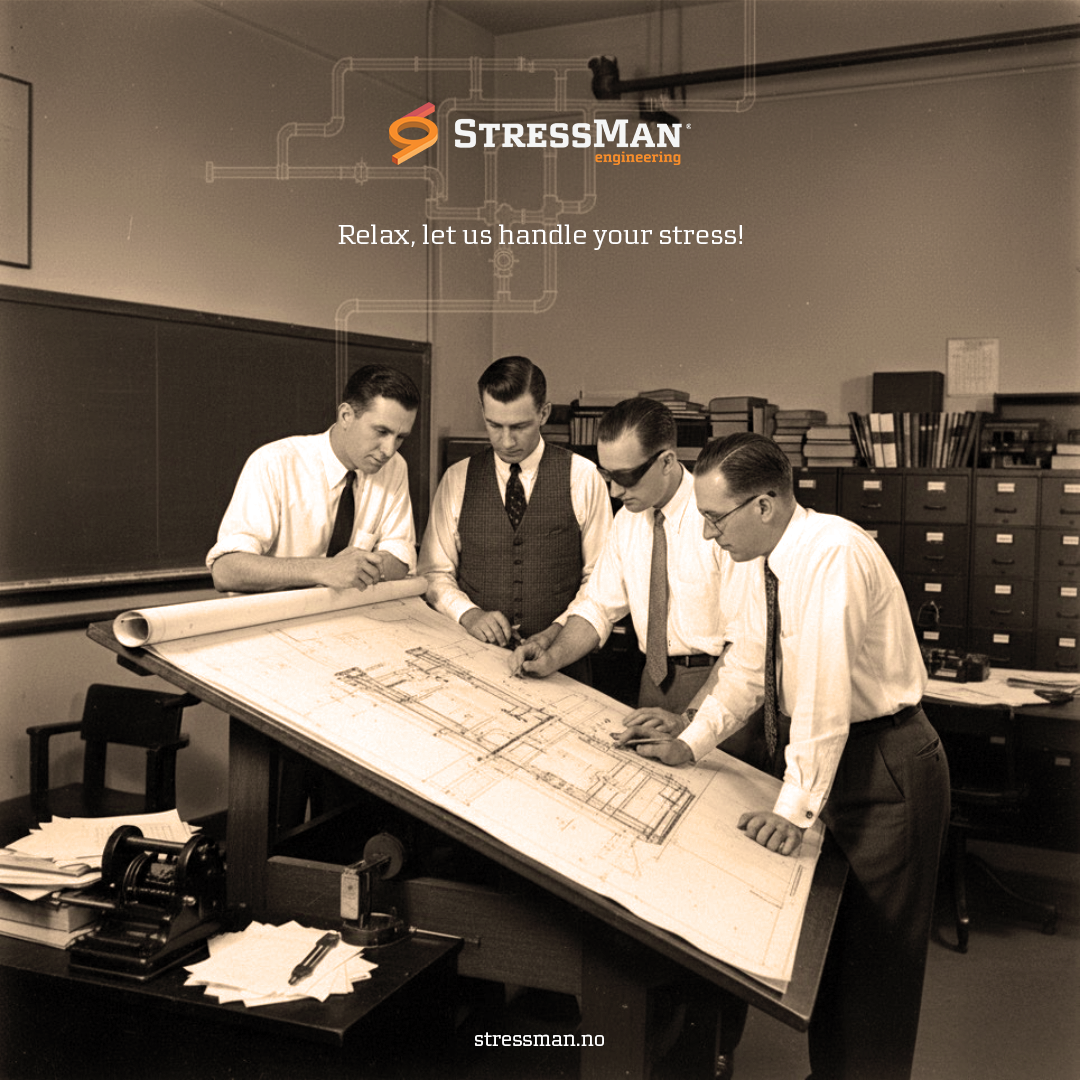
Back in 1955 (the year Piping Design found its voice), a paper quietly reshaped the way we understand piping systems.
A man named A. R. C. Markl published “Piping Flexibility Analysis”, setting, for the first time, clear rules for calculating stress and fatigue in piping components.
That milestone wasn’t a sudden leap; it was the culmination of years of experimental work dating back to the 1940s, when Markl and his colleagues at Tube Turns carried out pioneering fatigue tests on piping components. One of the early papers was co-authored with H. George from Kellogg; however, most of this foundational work originated from the Tube Turns team.
Their persistence gave birth to a framework that would later be incorporated into the ASA B31.1 1955 Code, guiding the industry for nearly six decades.
What’s fascinating is how humble Markl’s own words were:
“While the formulas and values given are based on the best available information, they are by no means to be taken as scientific fact… The prime purpose… is to provide standardized assumptions… and to stimulate further research.”
In other words, Markl didn’t just give us rules; he gave us a mindset: to never stop questioning, refining, and learning. At Stressman Engineering, we often reflect on this legacy and would like to further evolve the science. Today, with advanced simulation tools and decades of accumulated data, we can analyze in minutes what Markl could only approximate with ingenuity and experimentation. Yet the spirit remains the same, using every calculation to push understanding one step further.
Because good engineering isn’t about having all the answers. It’s about asking the right questions, just like Markl did 70 years ago.